Why Footwear Returns Need More Than Better Sizing: Solving the “Fit vs. Look” Problem

Online footwear retailers often treat product returns as a simple sizing issue. A shopper orders the wrong size, the shoes do not fit, and the pair comes back.
In practice, the problem is more complicated.
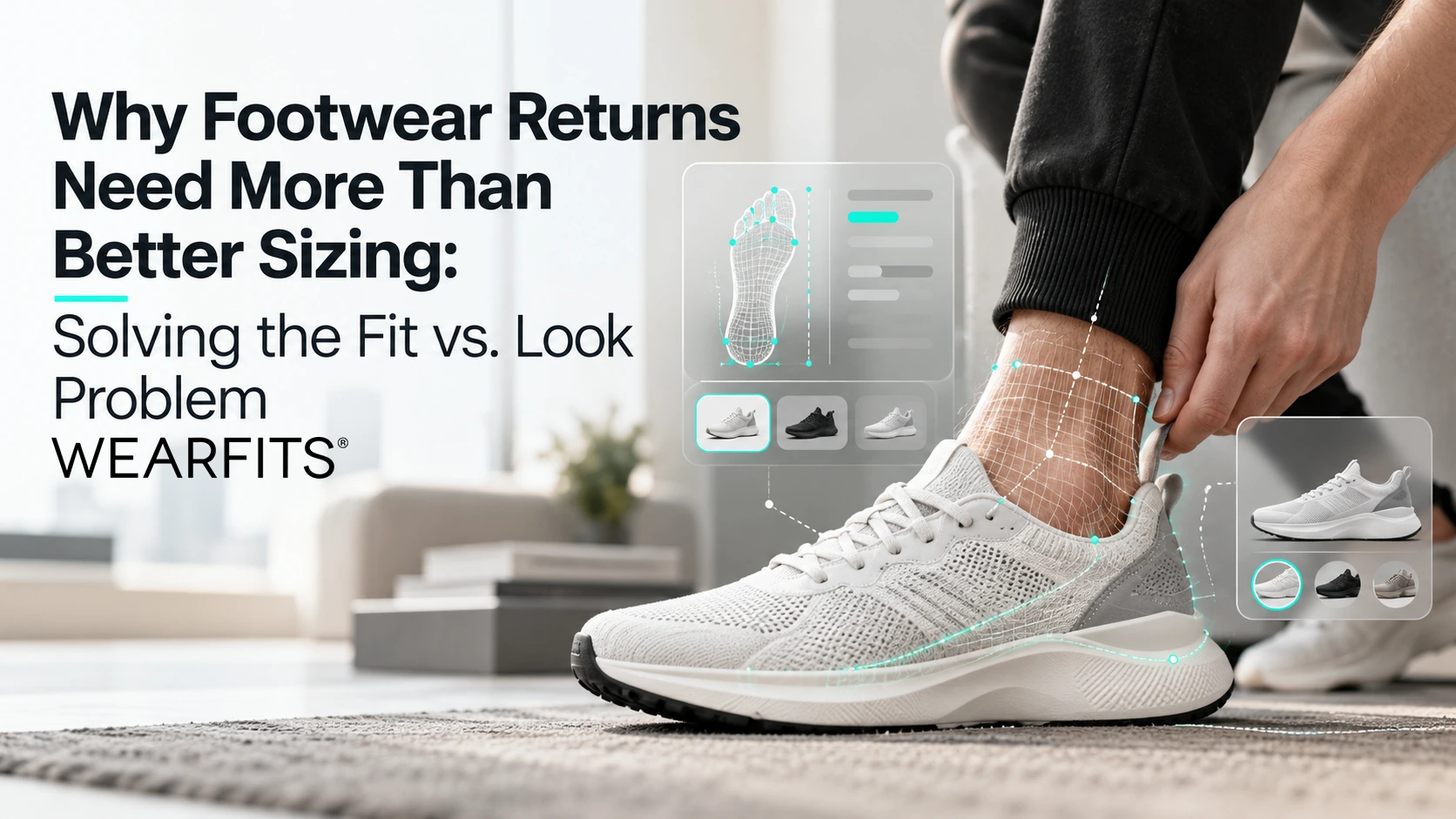
There are two very different reasons why customers return shoes: sometimes the footwear does not physically fit, and sometimes it fits perfectly well but does not look the way the shopper expected.
These two situations may appear similar in a returns dashboard, but they have completely different causes. More importantly, they require different technologies to solve them.
Industry data highlights how important this distinction is. Sizing, fit, and color issues account for a significant share of retail returns, while sizing and fit alone are responsible for more than half of fashion returns in some datasets. Shopify-related analyses also suggest that a large percentage of apparel returns involve products that simply do not fit correctly. PowerReviews research adds another dimension: shoppers also return fashion products because they look different from what they expected based on product photography.
This creates what can be called the Two-in-One Problem of footwear e-commerce.
The Problem With Traditional “Size & Fit” Return Categories
Many e-commerce platforms group footwear returns under broad labels such as “Size & Fit.”
That classification is convenient for reporting, but it hides two fundamentally different customer experiences.
The first is a physical sizing failure.
The shoe may be too long or too short. The width may feel restrictive. The instep may be too tight, the heel may slip, or the toe box may create pressure. In this situation, the geometry of the shoe simply does not match the customer's foot.
The second is a visual or styling failure.
Here, the shoe may technically fit, but the customer does not like the way it looks when worn. The silhouette may feel too bulky. The proportions may appear different from the product photographs. The color may look different in natural lighting, or the design may simply not complement the customer's clothing or body proportions.
These two problems should not be treated as one.
A shopper can receive the correct size and still return the shoes because the product does not match their visual expectations.
Likewise, a shopper may love the appearance of a shoe but still return it because the physical fit is uncomfortable.
Traditional e-commerce interfaces rarely address both problems at the same time.
Why Physical Shoe Stores Have an Advantage
A traditional shoe store naturally solves both problems during the same shopping journey.
A sales associate can measure the customer's foot, recommend a size based on experience with the brand, and bring several options to try.
The customer then puts the shoes on, walks around the store, checks the fit, and looks in a mirror.
Within a few minutes, two critical questions are answered:
Does the shoe fit correctly?
Do I like how it looks when I wear it?
That feedback loop happens before payment.
Online shopping removed most of that process.
Instead of measurement, physical try-on, and a mirror, shoppers are usually given studio photographs, generic size conversion tables, dropdown menus, and written size guides.
The result is uncertainty.
And uncertainty is one of the main drivers of footwear returns.
Failure Mode One: The Shoe Does Not Fit
Footwear sizing is far less standardized than many consumers assume.
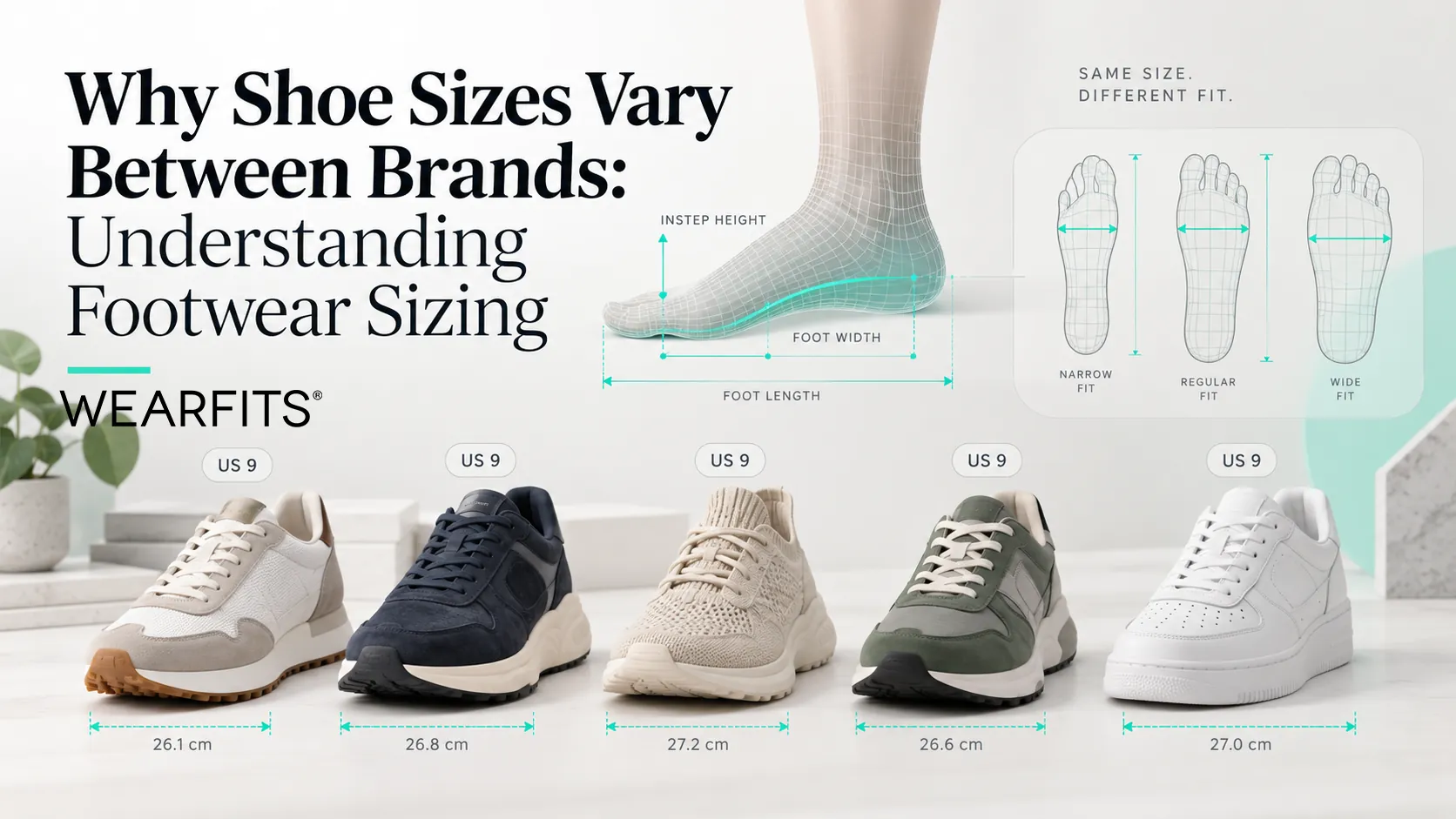
A women's US size 8 from one manufacturer can differ noticeably from a size 8 produced by another company. The interior dimensions of the shoe depend on the brand's last, construction method, footwear category, and intended fit.
Even within one brand, different styles can behave differently.
A running shoe, court shoe, boot, and formal shoe carrying the same printed size may have very different internal dimensions.
Generic international conversion tables make the problem worse.
A simple formula such as “US 9 equals EU 42” suggests precision that often does not exist. According to the data referenced in the original analysis, generic conversion tables can produce relatively poor matching accuracy.
Static size charts are also frequently ignored by customers.
This means shoppers often rely on their “usual size,” despite the fact that the same nominal size can vary considerably between brands and models.
When the mismatch is large enough, the result is predictable: discomfort followed by a return.
For online footwear retailers, solving this problem requires more than presenting another size chart.
It requires understanding the shopper's actual foot dimensions and comparing them with the geometry of the specific shoe.
Failure Mode Two: The Shoe Fits but Looks Wrong
Correct sizing does not guarantee customer satisfaction.
Online product pages typically present shoes under ideal conditions. Professional photographs use carefully controlled lighting, clean backgrounds, carefully selected angles, image editing, and sometimes professional models.
These images are useful for showing the product, but they do not always communicate how the shoe will appear on a particular customer.
Once the order arrives, the customer experiences the shoe in a completely different context.
A sneaker that looked streamlined online may feel oversized when worn.
A sole may appear thicker than expected.
A color may look different under natural light.
The proportions may not work with the customer's preferred trousers or outfit.
In this situation, the size recommendation may have been completely correct. The return happens because the customer's visual expectation does not match reality.
This is why sizing technology alone cannot eliminate footwear returns.
Retailers also need to reduce the gap between product photography and the customer's real-life appearance.
Why Standalone Footwear Technology Often Falls Short
Between 2019 and 2025, many footwear technology solutions focused on one side of the problem.
The market effectively developed two separate categories.
Standalone Foot Measurement and Sizing Tools
The first category includes hardware scanners, smartphone measurement applications, depth-sensor systems, photo-based measurement tools, and advanced size-chart widgets.
These technologies attempt to answer:
“Which size should I buy?”
They may measure the customer's foot or compare user information with brand sizing data.
However, they provide little or no information about how the shoe will actually look when worn.
A shopper can therefore receive an accurate size recommendation and still return the product because the visual result is disappointing.
Standalone AR Virtual Try-On
The second category includes augmented reality footwear try-on platforms.
These systems place a digital 3D model of the shoe onto the customer's foot through a smartphone camera.
They attempt to answer:
“How will this shoe look on me?”
This improves visual confidence, but many standalone AR systems historically lacked sophisticated sizing intelligence.
A shopper might love the way a sneaker looks in augmented reality, select their normal size from a dropdown menu, and discover after delivery that the shoe is too narrow or too short.
Both technologies therefore solve only half of the purchasing decision.
When retailers install them separately, shoppers may encounter disconnected widgets, inconsistent interfaces, and separate decision-making steps.
The customer experience becomes fragmented rather than simpler.
Bracketing: How Customers Compensate for Uncertainty
When online stores cannot provide confidence about fit, shoppers create their own solution.
That behavior is known as bracketing.
Instead of ordering one pair, a customer buys several sizes of the same product—for example EU 38, 38.5, and 39—with the intention of trying them at home and returning the pairs that do not fit.
From the customer's perspective, the strategy is logical.
The home effectively becomes the fitting room.
But for the retailer, bracketing creates significant operational and financial costs.
The source data indicates that a substantial share of online footwear consumers have used this strategy, while fashion accounts for the majority of retail over-ordering behavior.
PowerReviews data also attributes a meaningful share of fashion returns directly to customers ordering multiple sizes for comparison.
This means bracketing is not simply unusual shopper behavior.
It is a response to insufficient information during the purchase process.
Why Bracketing Damages Footwear Unit Economics
Every additional pair shipped with the expectation that it may come back creates costs.
First, there are reverse logistics expenses.
A returned parcel must be shipped, received, opened, inspected, processed, repackaged, and placed back into inventory. Depending on the retailer and logistics structure, return processing can cost a significant amount per parcel.
Second, there is inventory depreciation.
Returned footwear cannot always be sold again as new merchandise. Boxes may be damaged, packaging may be missing, soles may show signs of wear, or the product may require cleaning and inspection.
Some returned products therefore need to be discounted, moved to outlet inventory, or written down entirely.
Third, returns create an environmental cost.
Additional transportation means more delivery miles, additional packaging materials, and higher emissions associated with reverse logistics.
In other words, bracketing transfers uncertainty from the customer to the retailer's logistics network.
The customer protects themselves by ordering several options.
The merchant pays for the uncertainty.
The Better Approach: Recreate the Fitting Room Online
The most effective solution is not simply better sizing or better augmented reality.
It is the combination of both.
This is the approach behind the WEARFITS integrated footwear fitting workflow.
The goal is to recreate the essential functions of an in-store fitting experience within a single digital shopping journey.
In a traditional shoe shop, a customer typically goes through several steps.
First, the foot is measured.
Second, the correct size is identified based on the shoe or brand.
Third, the customer tries on the product.
Fourth, the shopper evaluates comfort and appearance.
Finally, once both fit and style feel right, the customer purchases the shoe.
A digital footwear experience should follow the same logic.
WEARFITS combines these steps through three connected technology layers.
Layer 1: AI Foot Measurement
The first layer focuses on the customer's physical foot dimensions.
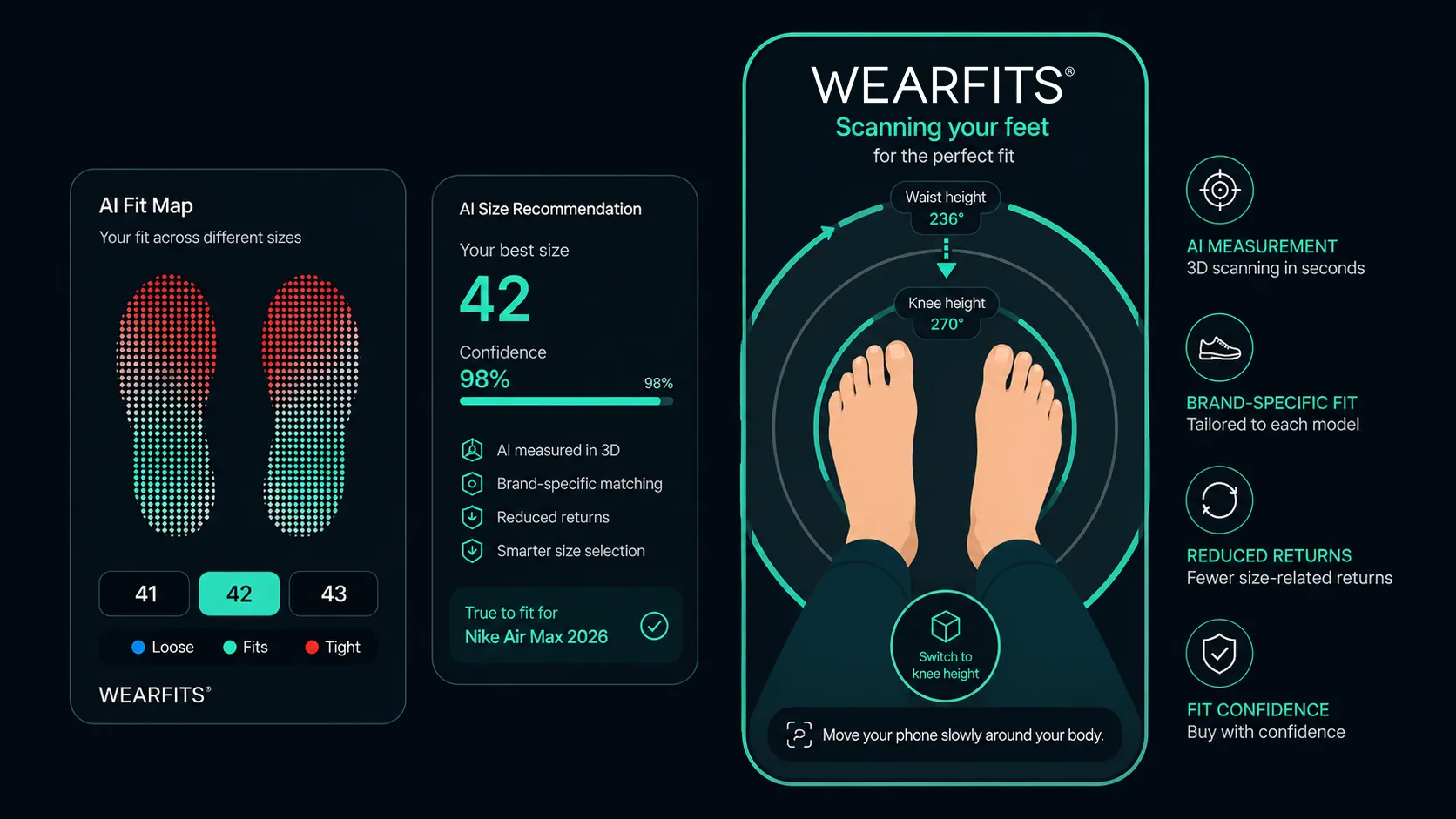
Using smartphone-based computer vision, the system captures several relevant measurements, including foot length, width, instep height, arch height, and ball girth.
This creates a more detailed digital representation of the shopper's foot than a basic “usual shoe size” field.
The process is designed to work directly through a smartphone browser, without requiring customers to visit a physical scanner.
According to the performance figures in the source material, the system is designed to provide high measurement accuracy while operating locally with low latency.
This information becomes the foundation for the next step: choosing the right size for a particular shoe.
Layer 2: Brand-Specific Size Matching
Knowing the dimensions of the foot is only useful if those measurements are compared with meaningful footwear data.
The second layer therefore connects customer measurements with the brand's internal size and last information.
Rather than assuming that every US 9 or EU 42 has the same interior dimensions, the system evaluates the shopper's foot against the geometry of a specific style.
This enables recommendations such as:
“For this particular last, your recommended size is US 9.5 rather than your usual US 9.”
That is a fundamentally different approach from generic conversion tables.
Instead of translating one printed size into another, the system attempts to match the customer with the geometry of the actual product.
This addresses the physical side of the purchase decision.
But one question still remains.
What will the shoe look like when the customer wears it?
Layer 3: Augmented Reality Virtual Try-On
The third layer adds visual context.
A digital 3D model of the exact footwear SKU is displayed on the customer's foot through augmented reality.
Instead of imagining the product from studio photographs, the shopper can view the shoe in the context that matters most: on their own foot.
This allows customers to evaluate factors such as silhouette, bulk, proportions, color, and overall appearance.
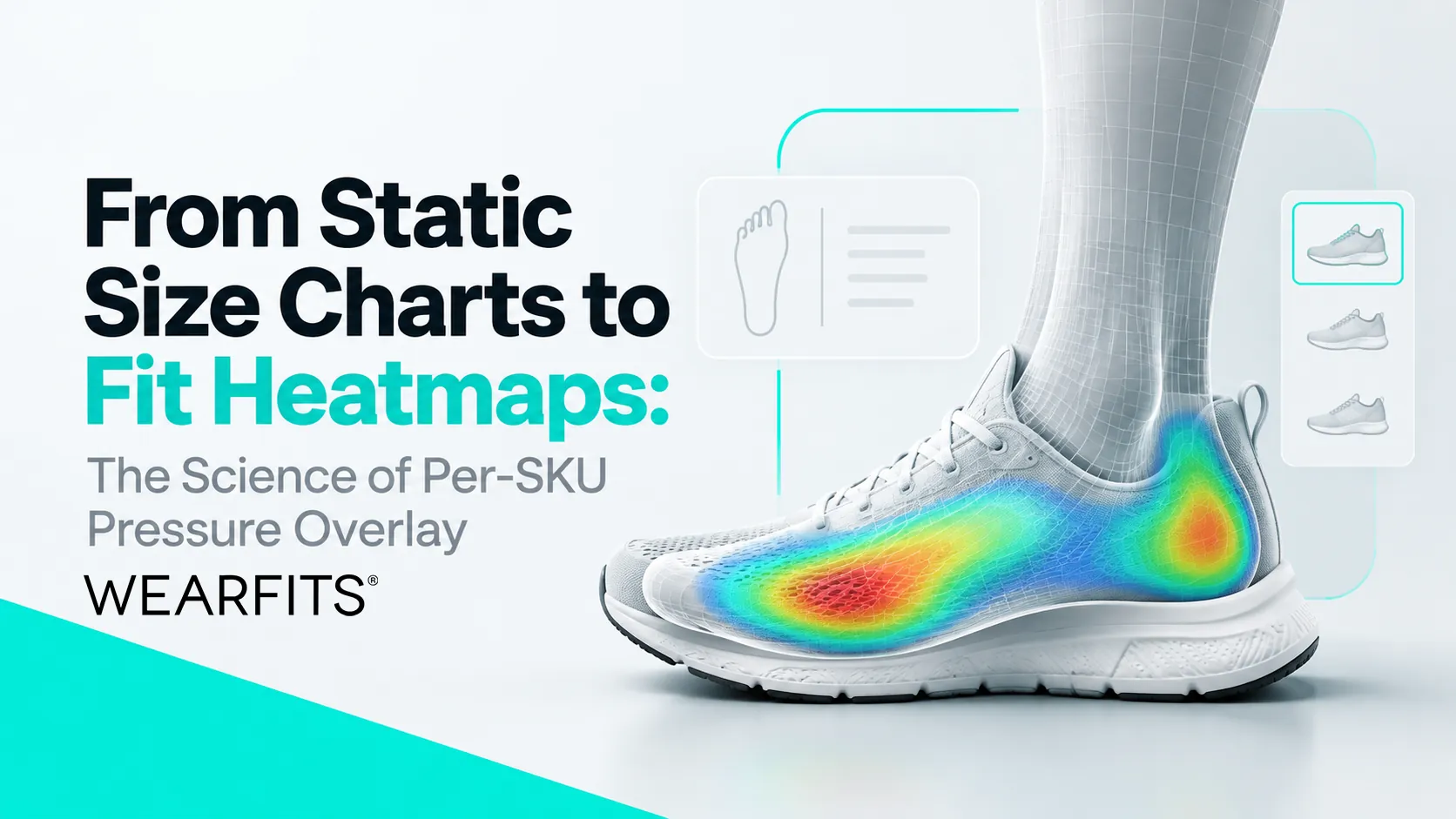
Within the WEARFITS workflow, the AR experience can also display fit information through visual indicators such as a thermal-style fit heatmap.
Customers can compare adjacent sizes and see how fit conditions change.
The goal is to combine visual appearance with sizing intelligence rather than treating them as two unrelated experiences.
One Workflow, Two Questions Answered
The key advantage of combining these technologies is that they address the two major sources of footwear uncertainty at the same time.
Foot measurement and size matching answer:
“Will this shoe physically fit?”
AR virtual try-on answers:
“Will I like how this shoe looks on me?”
Together, they create a digital experience that more closely resembles what customers naturally do inside a physical shoe store.
The shopper can move from uncertainty to a recommended size, visualize the shoe, compare available options, and make a purchase decision within one connected interface.
That is a much stronger experience than presenting a static size chart on one part of the product page and an unrelated AR button somewhere else.
How Integrated Sizing and AR Can Reduce Returns
The commercial impact of this approach can be significant.
According to the performance figures referenced in the original material, deployments combining sizing intelligence and AR virtual try-on have been associated with improvements across three important e-commerce metrics.
The first is return reduction.
When shoppers choose a size based on actual foot measurements and product-specific sizing data, fewer purchases should fail because of obvious fit mismatches.
The source reports return-rate improvements of approximately 20% in relevant deployments.
The second is conversion improvement.
Customers frequently hesitate because they are uncertain about whether a product will fit or whether it will look right.
Providing additional confidence before checkout can reduce that hesitation.
The cited performance data reports conversion lifts of approximately 30% in certain implementations.
The third is reduced bracketing.
When shoppers can compare fit information across nearby sizes, they have less reason to order several pairs merely to test them at home.
The original analysis cites reductions in multi-size ordering of approximately one-third.
These outcomes matter because they affect much more than customer convenience.
Lower return rates can reduce reverse logistics expenses, protect full-price inventory, and improve margins.
Higher conversion rates help retailers generate more value from existing website traffic.
Lower bracketing reduces unnecessary shipments and operational handling.
Why Footwear E-Commerce Needs Fit and Style Intelligence Together
The biggest lesson is simple: footwear returns cannot be understood as a sizing problem alone.
A customer may return shoes because they are too tight.
Another customer may return the same model because it looks too bulky.
Both returns may appear under the same “Size & Fit” label, but the purchase failed for completely different reasons.
That is why retailers need technology capable of handling both dimensions of customer confidence.
AI-powered foot measurement can reduce uncertainty around physical dimensions.
Brand-specific size matching can improve recommendations for individual products.
Photorealistic AR virtual try-on can help shoppers understand how footwear will appear on their own feet.
When these technologies operate together, online retailers can provide something much closer to the experience customers receive in a physical store.
From “Will It Fit?” to Confident Checkout
The future of online footwear shopping is not simply about adding another sizing widget or another AR feature to a product page.
It is about connecting measurement, sizing intelligence, and visual try-on into one seamless decision-making process.
That is the purpose of WEARFITS.
By combining AI foot measurement, brand-specific size matching, and augmented reality virtual try-on, WEARFITS helps footwear retailers address both sides of the purchase decision before the customer reaches checkout.
The shopper gains confidence that the shoe will fit.
They can also see how the product looks on their own foot.
For retailers, that can mean fewer avoidable returns, less bracketing, stronger conversion, lower reverse logistics costs, and healthier footwear unit economics.
Instead of asking customers to guess, the online store can provide the digital equivalent of measurement, fitting, and mirror feedback in one experience.
The result is a shorter journey from:
“Will this fit me?”
to:
“Add to Cart.”
Reduce Footwear Returns With WEARFITS
For Shopify merchants, the WEARFITS Shopify App provides a way to add virtual try-on and fitting technology to an online storefront.
Enterprise footwear brands can use the WEARFITS Sizing & Try-On API to connect custom size charts, internal footwear data, and last geometry with the platform.