Fashion at 160 km/h: How WEARFITS Brought AI Virtual Try-On to the Cultural Train Berlin–Warsaw

Introduction: Where Culture, European Rail, and High Fashion Intersect
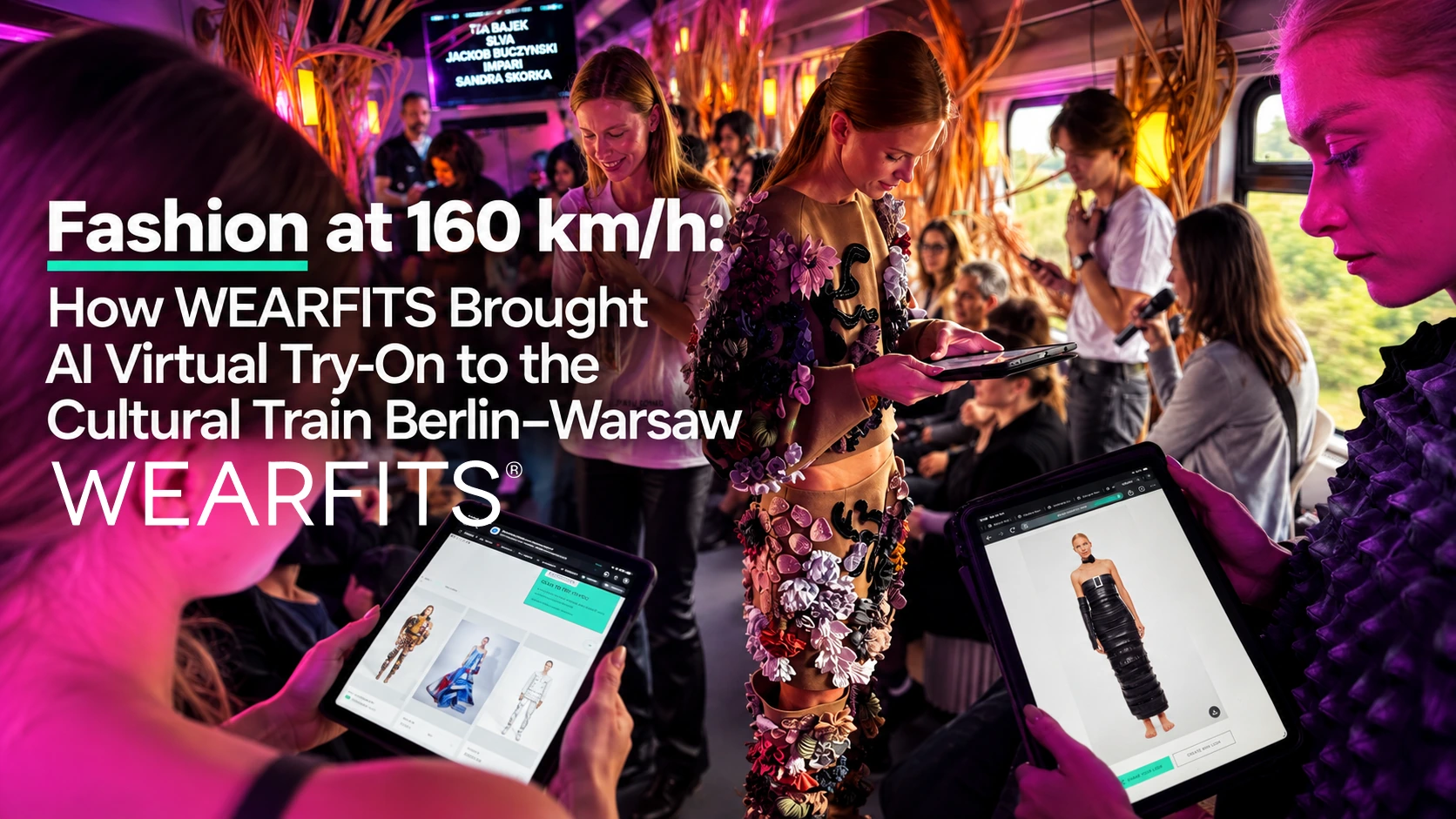
Imagine sitting on a passenger train speeding across the European countryside between Berlin and Warsaw. Outside your window, autumn landscapes blur past at over a hundred kilometers per hour. Inside your carriage, you are surrounded by an inspiring celebration of contemporary Polish and German art, literature, and music. But on October 10, 2026, as the Cultural Train (Pociąg do Kultury) made its final seasonal voyage connecting Berlin, Poznań, and Warsaw, something unprecedented took place: fashion took center stage, transforming the aisle into an interactive digital runway.
At WEARFITS, our mission is to redefine how consumers discover and experience fashion. We believe clothing shouldn't merely be viewed as static images on traditional e-commerce grids—it should be felt, personalized, and experienced seamlessly anywhere in the world.
When collaborating with the Cultural Train initiative—supported by European Union funding and regional cultural platforms—we asked an ambitious question: Can generative AI virtual try-on technology bridge physical experiential events and instant digital engagement on a moving express train?
The answer was a resounding success. In this deep-dive case study, WEARFITS shares the story, analytics, and strategic insights from our single-day virtual try-on activation on October 10, 2026. Here is how we brought 15 exclusive designer looks to life directly in the palms of passengers' hands.
The Creative Concept: 15 Exclusive Designer Looks in Your Pocket
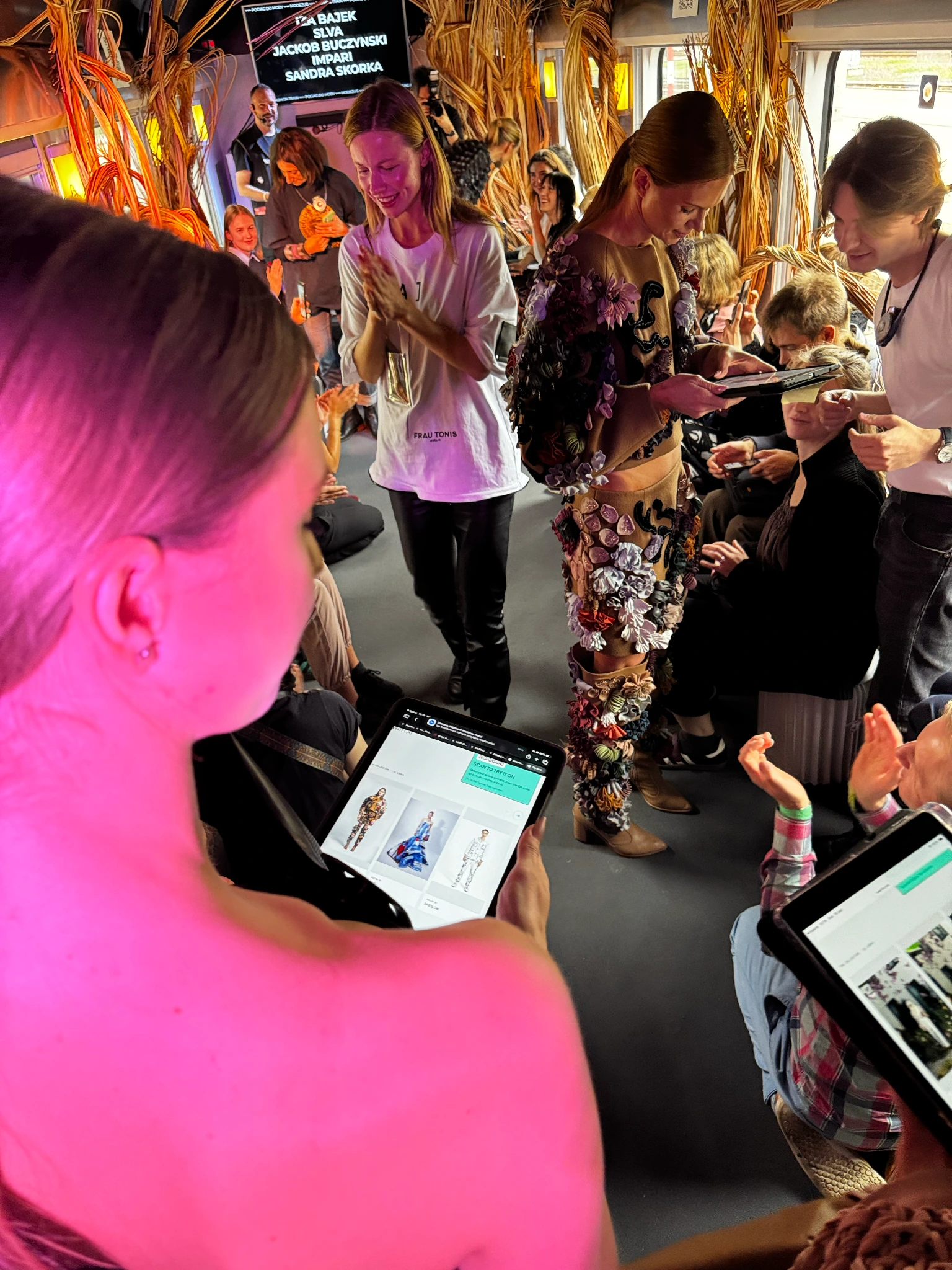
Throughout September 2026, the Cultural Train celebrated Polish-German friendship through creative journeys dedicated to literature, Chopin's music, and cross-border artistic dialogue. For the season finale on October 10, physical garments created by visionary Polish and German fashion designers were showcased live during the trip.
The featured collection highlighted 15 distinct looks from an extraordinary lineup of design talents:
- Sandra Skórka
- SLVA
- DRESLOW
- IMPARI
- Play Sustain — Justyna Rożek
- Iza Bajek
Traditionally, fashion showcases allow attendees to observe garments from a distance. WEARFITS turned passive observation into active personal participation.
By embedding customized QR codes on physical campaign leaflets and dedicated web landing pages, we invited passengers and brand followers to scan with their smartphone camera and immediately launch our AI-powered virtual try-on web experience.
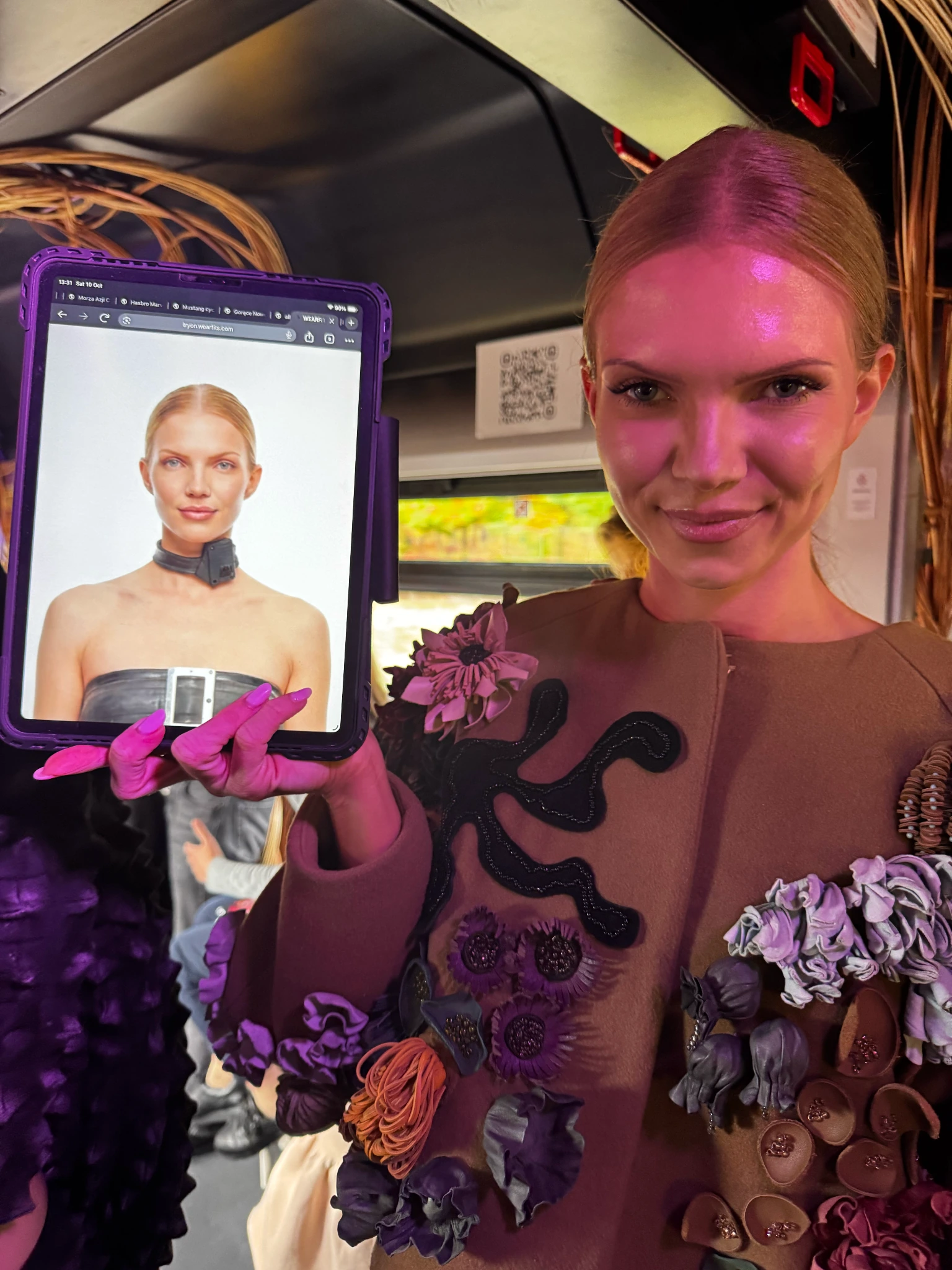
Without downloading an app or creating an account, users uploaded a selfie or silhouette image and saw precisely how these intricate designer garments draped on their own figure using WEARFITS generative AI visualization technology.
The Data Story: Inside a 24-Hour AI Virtual Try-On Campaign
Great storytelling in retail tech must be grounded in verifiable data. To evaluate how passengers interacted with virtual try-on during a live mobile event, we tracked activity using Google Analytics 4 (Europe/Warsaw time zone). The data was recorded on October 10, 2026, and refreshed on October 13, 2026, following technical filters to isolate authentic campaign interactions.
Here is what the campaign data revealed:
1. High Engagement: 96 Activations & 78 Generated Try-Ons
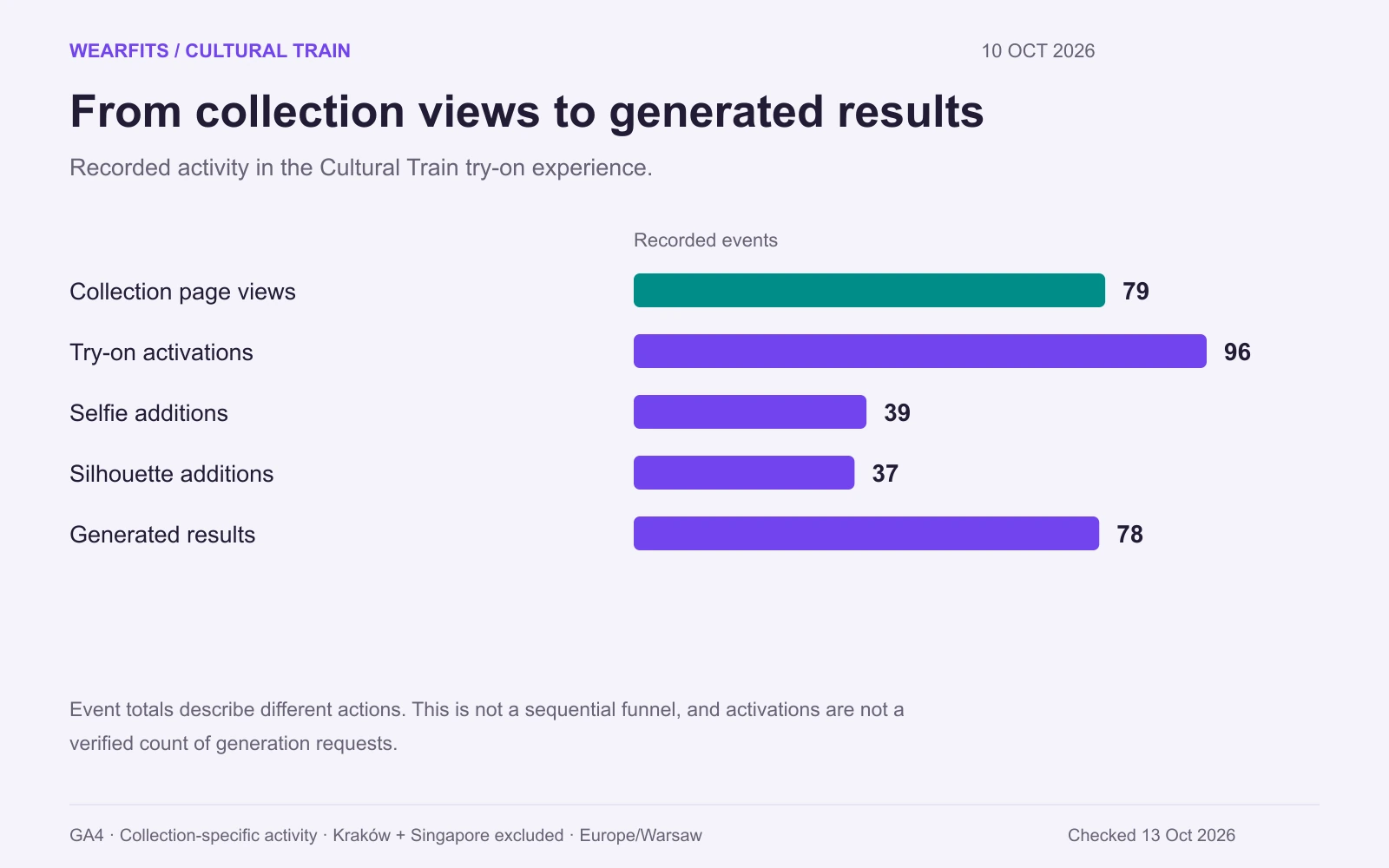
Across the campaign day, the WEARFITS experience registered 96 virtual try-on activations and 79 collection page views. These interactions resulted in 78 successfully generated virtual try-on visualization images. To produce these personalized AI try-on images, participants uploaded 39 selfie additions and 37 silhouette additions into the interface.
This is not a linear conversion funnel: a single uploaded user image can support multiple try-on results, and an activation represents interface initiation. The central success metric is the high output of 78 personalized AI try-on images created during the event.
2. Overwhelming Mobile Dominance: 96.2% Participation
When designing digital experiences for live events, mobile optimization is the foundational requirement.
Device breakdown for generated try-on results:
- Smartphones: 84.6% (66 generated images).
- Tablets: 11.5% (9 generated images).
- Desktop Computers: 3.8% (3 generated images).
Combined, mobile devices drove 96.2% of all generated try-on results (75 out of 78). Passengers scanned QR codes from their train seats, uploaded an image on their phone, and instantly received a high-resolution AI visualization as the train traveled between cities.
3. Afternoon Concentration: 89.7% of Results in Two Hours
User participation spiked dramatically in the early afternoon:
- 13:00 – 13:59: 55 try-on results generated (peak hour).
- 14:00 – 14:59: 15 try-on results generated.
Together, this two-hour window produced 70 out of the 78 generated results—accounting for 89.7% of total daily volume. This surge aligned with the live fashion presentation schedule on board. As models showcased physical garments and coordinators distributed leaflets, passengers engaged simultaneously with the digital try-on experience on their screens.
Physical-to-Digital Attribution: Leaflet Scans & Landing Entries
Connecting offline physical touchpoints to measurable online engagement is a core goal for omnichannel retail strategists. Our GA4 session source analysis provided concrete proof of physical-digital synergy:
Leaflet-Tagged Traffic Drove 55.1% of Try-Ons
Sessions tagged with campaign source label leaflet generated 43 try-on results, representing 55.1% of all generated results. The remaining 35 results (44.9%) were attributed to direct traffic (direct URL entries, bookmarks, or untagged QR scans).
Landing Page Entry Sessions
Sessions originating on the dedicated Cultural Train landing page accounted for 42 generated collection results—53.8% of the daily total. These same sessions recorded 42 collection page views, 55 try-on activations, 26 selfie additions, and 24 silhouette additions.
Strategic Takeaways for Retail Brands
Key lessons for fashion brands and event marketers from WEARFITS' campaign:
1. Zero-Friction Web Journeys Win Live Activations
During live events, consumers will not download a heavy mobile app or register. By leveraging instant, browser-based WebAI try-on via QR scans, WEARFITS eliminated friction and achieved a 96.2% mobile participation rate.
2. Generative AI Transforms Passive Viewers into Active Participants
Physical presentations create emotional inspiration, but spectators remain passive. Generative AI virtual try-on turns passive viewing into personal involvement. Seeing oneself wearing creations by Sandra Skórka or SLVA builds an intimate memory lasting far beyond the event.
3. Printed Collateral Combined with QR Codes Delivers High Yield
Over 55% of generated try-on results stemmed directly from physical promotional leaflets. Print paired with dynamic QR codes leading to interactive AI experiences is a top-performing digital conversion channel.
Conclusion: Shaping the Next Era of Experiential Fashion
The journey of the Cultural Train between Berlin and Warsaw on October 10, 2026, showcased a bold vision for the future of fashion retail. As fashion marketing evolves beyond static product photos, WEARFITS virtual try-on enables brands to bring their collections directly to audiences wherever they are. Generative AI allows consumers to see themselves in the clothes they admire.
Transform Your Brand's Customer Experience with WEARFITS
Ready to turn passive collection views into engaging, personalized digital experiences for your brand's audience? Discover how WEARFITS AI-powered virtual try-on solutions can elevate your e-commerce platform and live marketing campaigns.
Organizers:
PKP Intercity , Europäische Akademie Berlin e.V., and Deutsche Bahn.
WEARFITS Generative AI try-on is funded by the European Union.
Photos: Provided by organizers
Related posts
The Integration Era: 5 Lessons from Stride 2026 That Are Redefining Footwear
WEARFITS at Swap&Chill SGH 2026: How AI, Virtual Try-Ons and Smart Sizing Are Changing Sustainable Fashion
Why 85% of Online Shoppers Ignore Static Size Charts — and What Fashion E-Commerce Should Do Instead
